
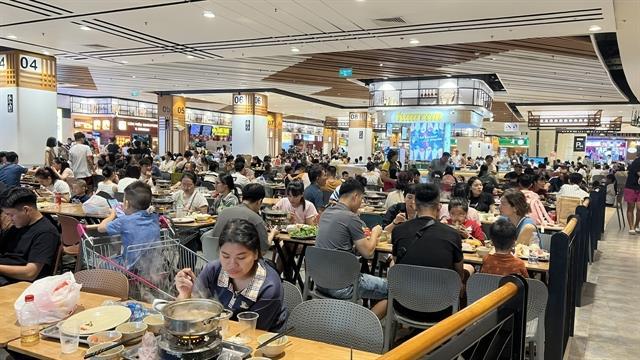
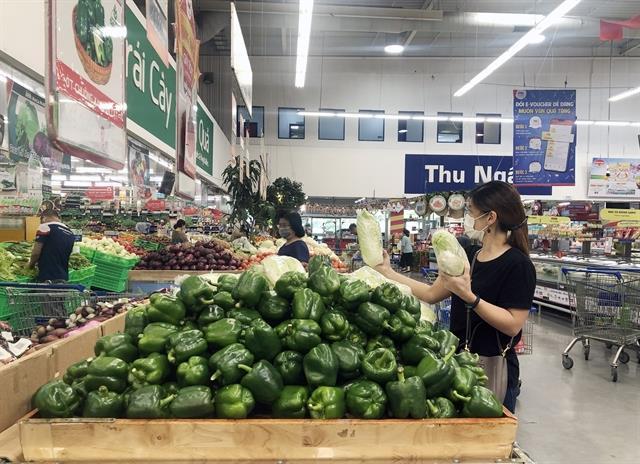
In its ''Vietnam 2026 Consumer Outlook,'' BMI forecast that real household spending will expand 7.2 per cent year-on-year to reach VNĐ3,952 trillion (US$152 billion) at constant 2010 prices.
Food, personal care products and school supplies were among the fastest-growing categories, fueling momentum for the city’s target of 18 per cent annual trade growth.
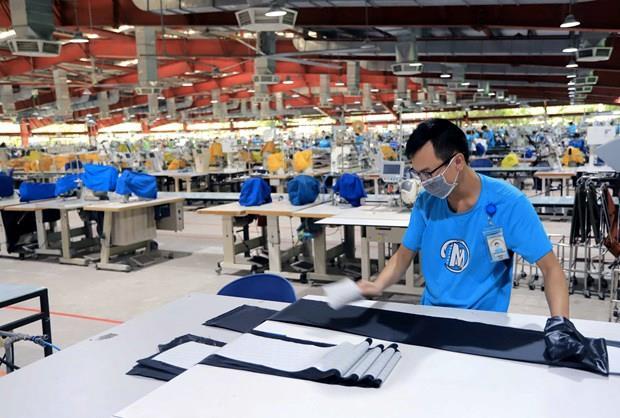
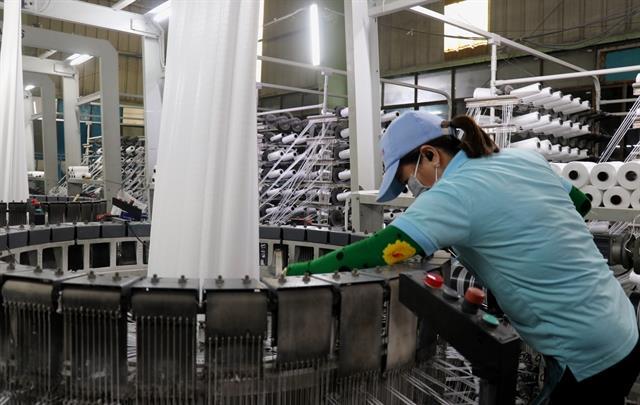
Việt Nam’s manufacturing sector continued to show improvement in November, with the Purchasing Managers’ Index (PMI) staying above the 50-point threshold for a second consecutive month of robust business activities.
Vietnamese manufacturers registered further expansions in output and new orders in August with the S&P Global Vietnam Manufacturing Purchasing Managers’ Index (PMI) at 52.4.
The S&P Global Vietnam Manufacturing Purchasing Managers'' Index (PMI) was unchanged at 50.3 in May, signalling a second consecutive marginal monthly improvement in business conditions in the sector.
“The solid expansion in new orders helped lead to a return to growth of manufacturing production in Việt Nam,” S&P said in a press release on Thursday.
The index signalled an end to the two-month period of improving business conditions at the start of 2024, but pointed to broadly unchanged operating conditions overall.
Even in a difficult economic context, it is expected that purchasing power during this year''s Lunar New Year could increase by over 10 per cent compared to the same period last year.
It was the second straight month of decline in factory activity, as output continued to shrink while new orders grew the least in the current sequence of expansion.
Việt Nam''s manufacturing sector returned to growth in August as some signs of recovery in demand supported renewed increases in both new orders and production, according to the S&P Global Việt Nam Manufacturing Purchasing Managers'' Index™ (PMI).
According to the General Statistics Office (GSO), local purchasing power had strongly rebounded in the past 10 months of 2022. This positive recovery is expected to drive retail market growth in the last quarter of the year.
Domestic purchasing power has rebounded after a strong decline caused by the COVID-19 pandemic. That rebound has facilitated businesses to step up production and seize new opportunities, experts have said.